A gentle reset from summer to autumn
After a long stretch of hot days, do you still feel tired despite sleeping, find your appetite is not quite right or keep choosing only cold foods and drinks?
From late summer into early autumn, daytime heat can linger while mornings, evenings and daylight hours begin to change. Meals are not the only thing that can lose their rhythm; sleep and the way we spend the day can become unsettled, too.
Here are manageable ways to review meals, hydration, rest, light movement and, when appropriate, the careful use of supplements as you move into autumn.
Check the foundations before adding something new
When thinking about health, it is easy to ask which nutrient to add or whether to start a supplement. Before that, take a quick look at the foundations of everyday life.
There is no need to correct everything at once. Notice one part of your routine that has slipped and begin by gently bringing that one thing back.
- Are meals ending with a staple food alone?
- Are you eating a main dish such as meat, fish, eggs or soy foods?
- Have vegetables and fruit become unusually scarce?
- Are you drinking water or unsweetened tea regularly?
- Have your waking and sleeping times shifted considerably?
- Are you creating a cool enough environment for rest instead of enduring the heat?
Use staple, main and side dishes as a flexible guide
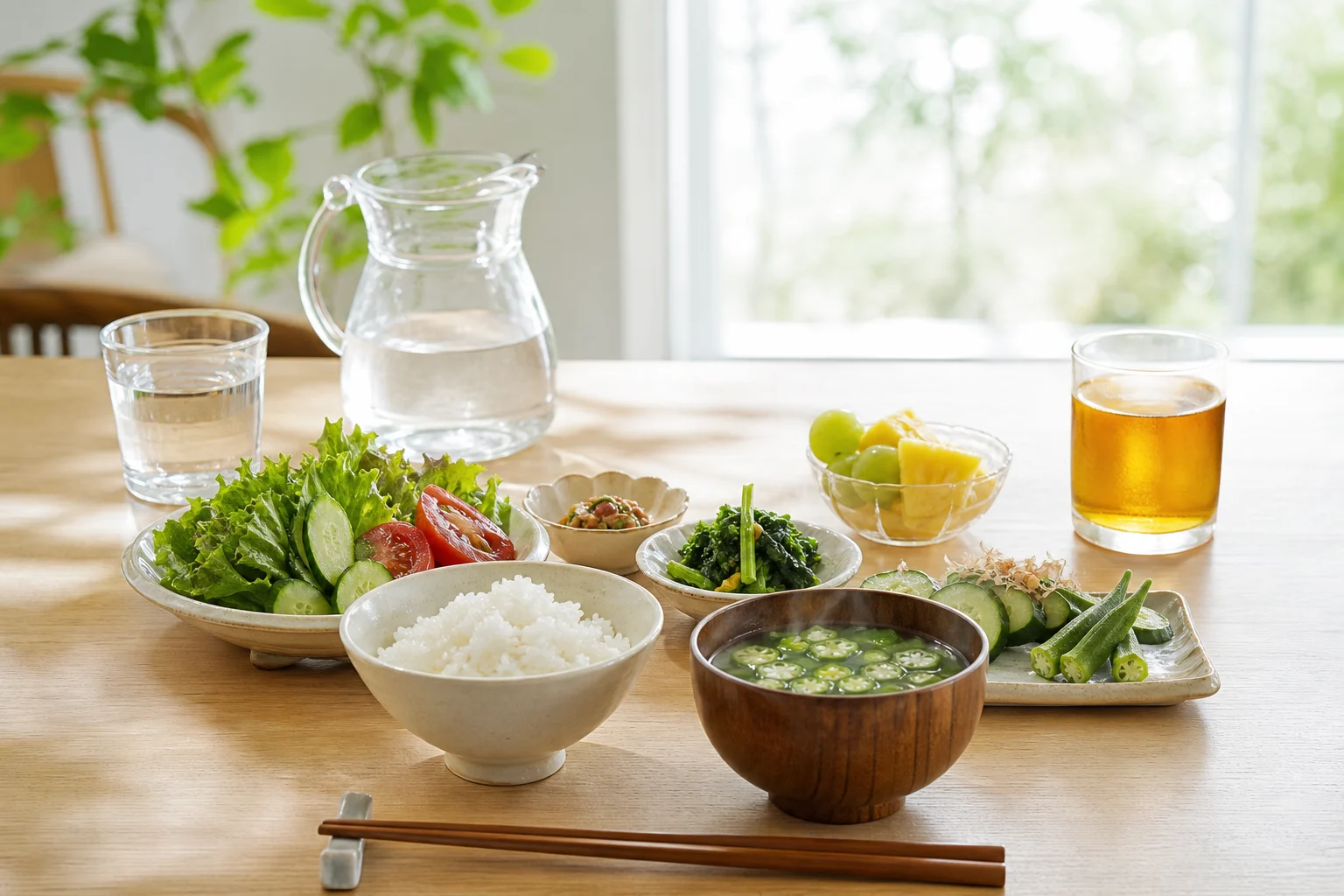
During hot weather, meals can lean heavily on easy options such as somen or other cold noodles. Rather than deciding those foods are off limits, add one simple item such as an egg, tofu, natto, fish or chicken.
Protein from meat, fish, eggs, dairy and soy foods is an important building block for the body. It can be easier to keep up when spread across the day, such as yoghurt or an egg at breakfast and tofu or fish at lunch, instead of trying to fit everything into one meal.
Tomatoes, peppers, pumpkin, mushrooms and fruit can also begin with a manageable portion. Japan's Food Guide Spinning Top similarly encourages looking at the whole diet through a combination of staple dishes, main dishes, side dishes, dairy and fruit.
Look beyond sleep duration
If you wake without feeling refreshed, consider not only how long you slept but also the bedroom temperature, light and the way you spent the time before bed.
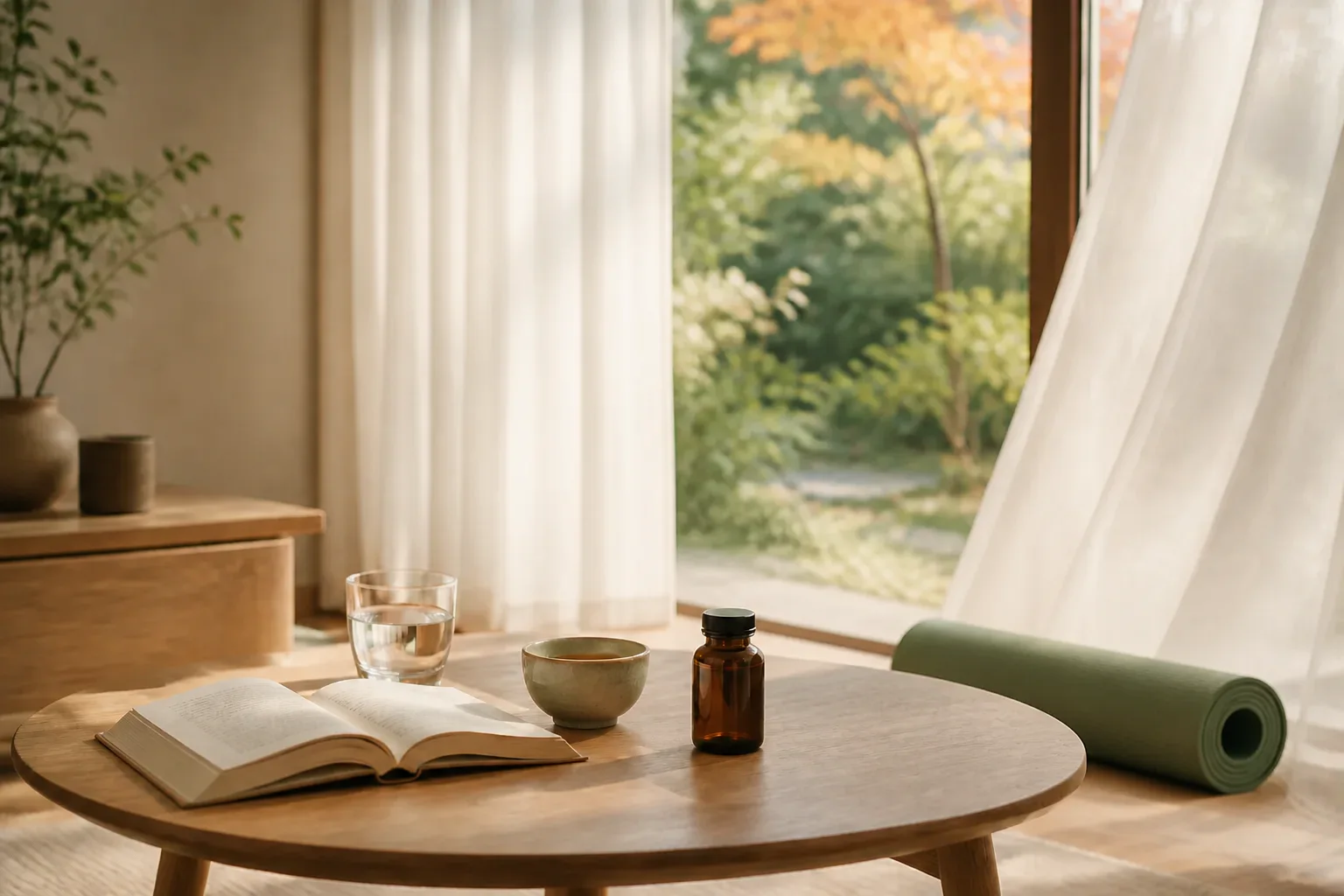
Open the curtains in the morning and keep your waking time reasonably consistent. In the evening, step back from bright light and work, and create a calming sequence with a bath, reading or gentle stretching. On warm nights, adjust the air conditioning and bedding rather than forcing yourself to tolerate the heat.
Japan's Sleep Guide for Health Promotion 2023 notes that sleep needs vary between individuals and encourages attention both to adequate sleep time and to whether sleep feels restorative.
Move lightly during cooler hours
Long periods of hot weather can reduce opportunities to go out and move. When you feel well, begin with a short walk in the cooler morning or evening, or slowly move your shoulders and hips indoors.
There is no need to push through fatigue, dizziness, nausea or sleep deprivation. Check the heat index and how you feel, and rest somewhere cool first when needed.
Do not rely only on cold drinks
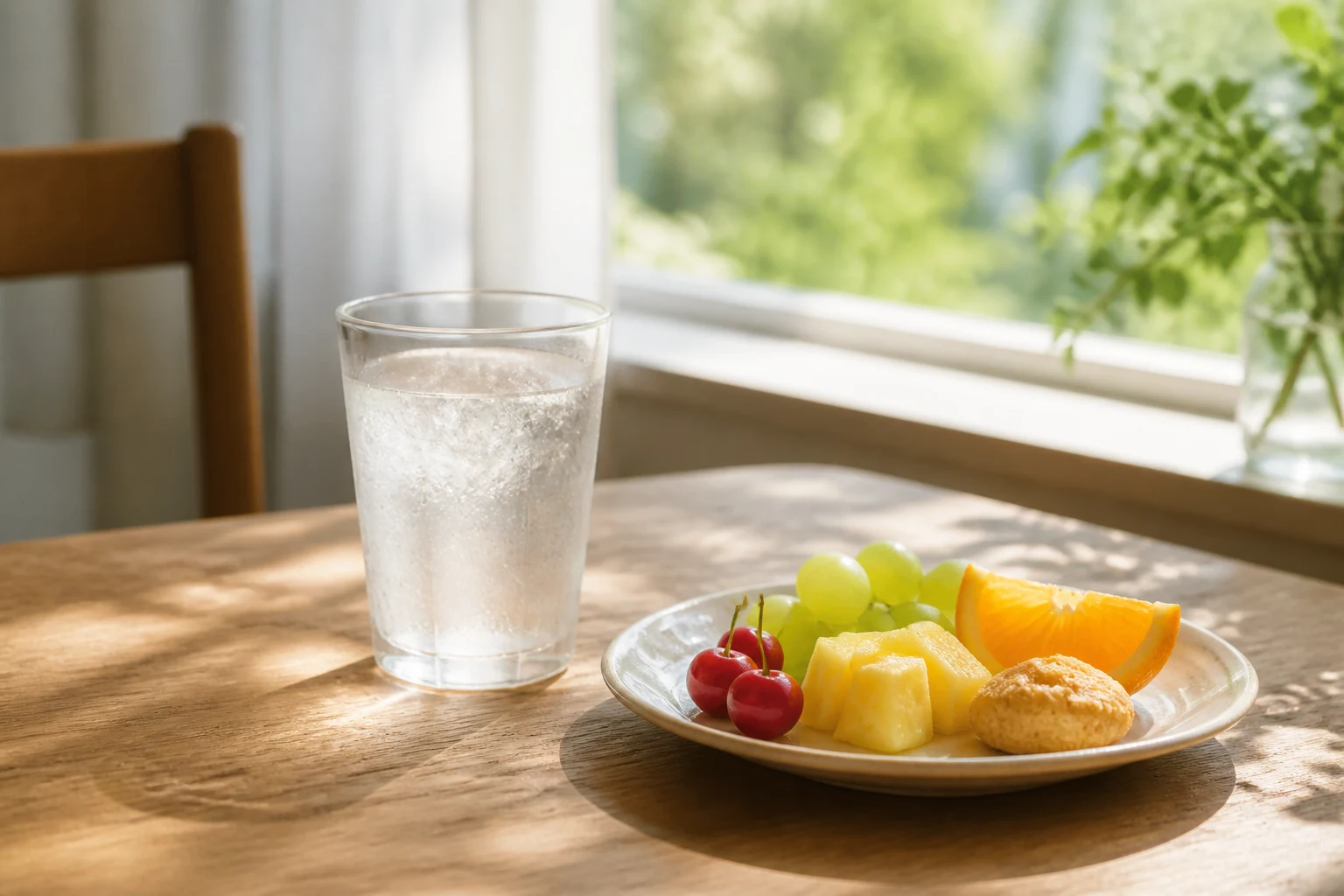
Hydration matters, but it is also worth checking whether sweet drinks have become the default. Use water and unsweetened tea as a base, while remembering that soup, miso soup and fruit can contribute fluid through meals.
A chilled soup may suit a hot day, while a warm soup may feel better when the air cools. Choose according to the temperature and what feels easy to eat that day.
Use supplements carefully to fill a genuine gap
Supplements and health foods do not replace meals, movement or rest. If your diet feels unbalanced, review several days of eating first and consider a supplement only as support when a shortfall still concerns you.
If you take medicine, receive ongoing treatment, are pregnant or breastfeeding, or have allergies, speak with a doctor, pharmacist or another qualified professional before starting. Stop using the product and seek medical advice when necessary if you feel unwell after taking it.
- Read the suggested daily amount and all cautions on the package.
- Do not combine several products that contain the same ingredient.
- Follow the suggested amount instead of assuming more is better.
- Keep a record of the product, amount, duration and any changes you notice.
- Do not expect a supplement to treat a condition like a medicine.
Change just one thing today
A seasonal transition does not require a complete lifestyle overhaul. Add one small choice at a time, care for the body that carried you through summer and move slowly toward an autumn rhythm.
- Add an egg or yoghurt to breakfast.
- Serve tofu, fish or a vegetable side dish with noodles.
- Keep water or tea within reach.
- Open the curtains after waking.
- Walk or stretch for only five to ten minutes during a cooler part of the day.
- Make the last ten minutes before bed screen-free.
- If you use a supplement, check its label and your current medicines first.
Frequently asked questions
Q. Should everyone take a supplement at the end of summer?
No. The season alone does not mean everyone needs one. Review meals and daily habits first, then consider a supplement only as support if a shortfall concerns you. Ask a doctor or pharmacist before use if you take medicine or have another reason to seek individual advice.
Q. What can I do when I have little appetite?
Instead of forcing a large meal, combine foods that feel easier to manage, such as eggs, tofu, yoghurt and soup. Seek medical advice rather than relying on self-care alone if poor appetite or other symptoms continue.
Q. If I still feel tired after sleeping, should I sleep longer?
Sleep needs vary. Review the bedroom environment, sleeping and waking times, and how you spend the day as well as total duration. Seek medical advice if strong fatigue persists, affects daily life, or you have been told that you snore heavily or stop breathing during sleep.
Q. Can health foods balance my diet on their own?
No. Health foods are not a substitute for ordinary meals. Keep staple, main and side dishes as the foundation, and use other products only as support when appropriate.
References
- Consumer Affairs Agency, Japan — Health foods for consumers
- Ministry of Health, Labour and Welfare, Japan — Sleep measures and Sleep Guide 2023
- Ministry of Health, Labour and Welfare, Japan — Physical Activity and Exercise Guide 2023
- Ministry of Agriculture, Forestry and Fisheries, Japan — Food Guide Spinning Top
This article provides general lifestyle information and is not a substitute for medical diagnosis or treatment. Seek medical advice without pushing through severe fatigue, dizziness, nausea, fever, breathing difficulty or symptoms that persist.
OKD Vitalis will continue to share approachable ideas for food and health that can fit naturally into everyday life.