Make room for a lighter rainy season
When rainy days continue, your body can feel heavy. Laundry dries slowly, the kitchen needs attention, and too many cold drinks may leave your stomach uncomfortable. Japan’s rainy season, tsuyu, is a time to gently lighten your routines rather than push through on willpower.
The Japan Meteorological Agency describes tsuyu as a period or phenomenon of frequent rain and cloudy days from late spring into summer. Alongside the rain, humidity, temperature and daily rhythms can fluctuate. Here are ways to care for meals, the kitchen and your rooms, with a little inspiration from yakuzen food traditions.
1. Begin by keeping dampness from accumulating
In yakuzen, humid periods such as tsuyu are traditionally associated with excess “dampness” in the body. This is a traditional concept, not a medical diagnosis.
In everyday terms, some people notice heaviness, reduced appetite, puffiness, shallow sleep or an unsettled mood during a run of rainy days. Before starting a special health routine, simply give some attention to warm foods, aromatic ingredients and tidying damp areas of the home.
2. Start the morning with something warm
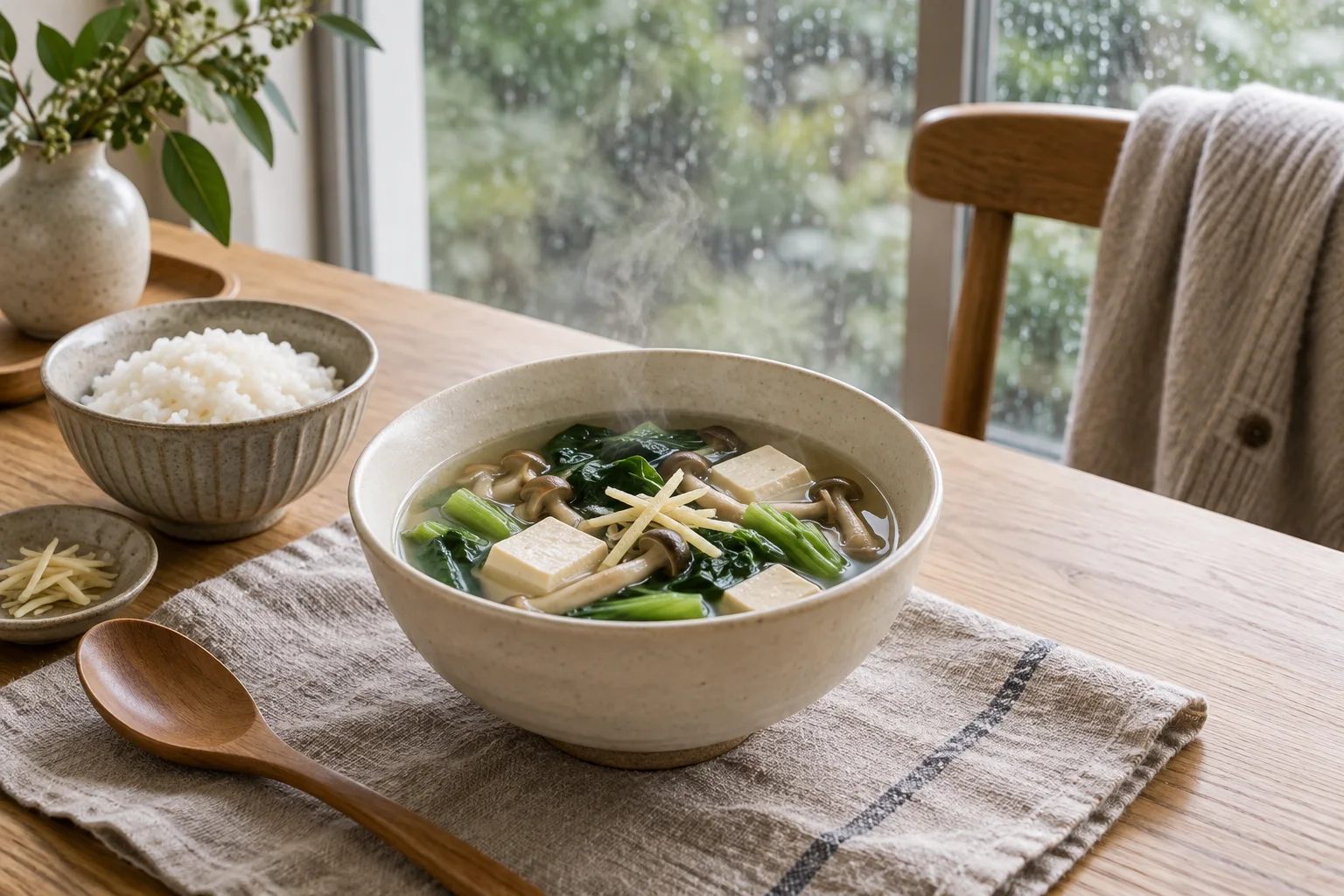
Warm miso soup or another soup can be a comfortable choice for a rainy-season morning. The ideas below offer a gentle alternative when cold foods and drinks leave you feeling chilled.
There is no need to make complicated yakuzen dishes. If you feel a little sluggish, try a cup of warm tea before reaching for an iced latte or ice cream first thing. It can be a gentle way to begin the day.
- Miso soup with ginger
- Scallion and tofu soup
- Rice porridge topped with shiso
- Wakame and egg soup
- Job’s tears tea or another warm tea
3. Prepare the kitchen with food-poisoning prevention in mind
From the rainy season into summer, food poisoning at home deserves attention. Japan’s Ministry of Health, Labour and Welfare introduces three principles: keep bacteria off food, prevent their growth and kill them. The Ministry of Agriculture, Forestry and Fisheries also advises avoiding storage in places that become hot, receive direct sunlight or have high humidity.
Put chilled and frozen groceries away promptly when you return home. Leaving them at room temperature to deal with later can allow food to spoil faster than expected during tsuyu.
Use separate chopping boards and knives for meat, fish and vegetables. If that is difficult, at least avoid cutting raw-eaten vegetables immediately after meat or fish without cleaning the utensils. Wash, dry and, where appropriate, disinfect cooking tools.
Cool prepared food promptly and eat it soon. Take care with batch cooking: cool cooked dishes as quickly as practicable before refrigerating them, and reheat thoroughly when serving.
4. A less humid room can feel more comfortable
Rainy-season discomfort can come from the air around you as well as your body. Tokyo’s Bureau of Public Health guidance notes that mould and mites are more likely to develop when humidity exceeds 60%. A room that traps moisture can feel heavy.
Begin with three habits. Ventilate for five minutes in the morning or evening: even on rainy days, briefly opening a window can create airflow. Avoid overfilling wardrobes and bedding cupboards; a little space allows air to circulate. Keep wet areas dry by wiping droplets after use, running extractor fans and drying mats in the kitchen, wash area and bathroom.
5. Heat illness can happen during the rainy season too
It is easy to assume that tsuyu is safe because it is not midsummer. Yet high humidity makes sweat evaporate less easily, allowing heat to build up in the body. Japan’s Ministry of the Environment explains that the WBGT heat index accounts for humidity, sunlight and radiant heat as well as air temperature.
Avoid excessive cooling, but do not force yourself to endure uncomfortable heat. Before dismissing it as only a little warm, check the room temperature and humidity and adjust early.
- Drink before you feel thirsty.
- Avoid pushing yourself to go out on muggy days.
- Use air conditioning or dehumidification indoors when needed.
- Pay particular attention to older people and children.
6. Familiar ingredients for rainy-season meals
Using everyday ingredients well is easier to sustain than searching for special foods.
- Ginger: a little in miso soup, other soups or stir-fries adds aroma, especially when cold foods have become frequent.
- Shiso: its fragrance can make meals more appealing when humid weather dulls your appetite. Try it with rice, chilled tofu, somen or salad.
- Scallions: easy to add to warm soups and everyday meals.
- Beans and seaweed: manageable side dishes can include hijiki, wakame, tofu or natto. Choose what comfortably fits your routine.
- Job’s tears (hatomugi): traditionally used in rainy-season food practices, it can be enjoyed as tea or added to mixed grains.
A small rainy-season checklist
Trying to do everything perfectly makes habits harder to sustain. Choose just one thing you can do today. Caring for your surroundings and caring for yourself often go together.
- Drink warm tea in the morning.
- Add a little ginger to miso soup.
- Check food at the back of the fridge.
- Dry your chopping board thoroughly.
- Wipe droplets around the washbasin.
- Open the wardrobe briefly to let air through.
- Check the hygrometer.
- Start dehumidifying early on muggy days.
Frequently asked questions
Q. Should I avoid cold drinks during the rainy season?
There is no need to avoid them completely. If you feel sluggish or your stomach tends to feel chilled, include warm tea or soup rather than drinking only cold beverages.
Q. What matters most for food during tsuyu?
Begin with food-poisoning prevention: wash hands, keep utensils clean, store food properly and cook thoroughly. Japan’s health and agriculture ministries introduce the principles of keeping bacteria off food, preventing their growth and killing them.
Q. At what humidity should I pay attention?
Tokyo’s Bureau of Public Health guidance notes that mould and mites develop more easily above 60% humidity. As humidity rises readily during tsuyu, ventilate and dehumidify regularly as needed.
Q. Can heat illness occur during tsuyu?
Yes. Risk depends on humidity and surrounding heat conditions as well as temperature. The Ministry of the Environment’s WBGT index includes humidity in its assessment.
References
- Japan Meteorological Agency: About tsuyu
- Ministry of Health, Labour and Welfare: Preventing food poisoning at home
- Ministry of Agriculture, Forestry and Fisheries: Three food-poisoning prevention principles
- Ministry of Agriculture, Forestry and Fisheries: Food poisoning can happen at home
- Tokyo Bureau of Public Health: Guidance for healthy and comfortable housing
- Ministry of the Environment: Understanding WBGT
Rainy-season self-care can begin with keeping moisture from accumulating: enjoy warm soup, keep the kitchen clean, put food away promptly, refresh the room’s air and use dehumidification according to humidity without forcing yourself to endure discomfort. These small habits can make the season feel a little lighter. Care gently for your body and your home through the rainy days.