A traditional food perspective on damp days
Japan's rainy season can bring a lingering sense of heaviness, a quieter appetite and a wish for simpler meals. In yakuzen, a traditional food culture, ideas such as dampness are used to think about seasonal eating rather than to make a diagnosis.
If cold drinks and chilled meals have become your default, adding a warm soup or softly cooked rice may simply make the table feel kinder. Notice what is comfortable for you.
Begin with ingredients you already know
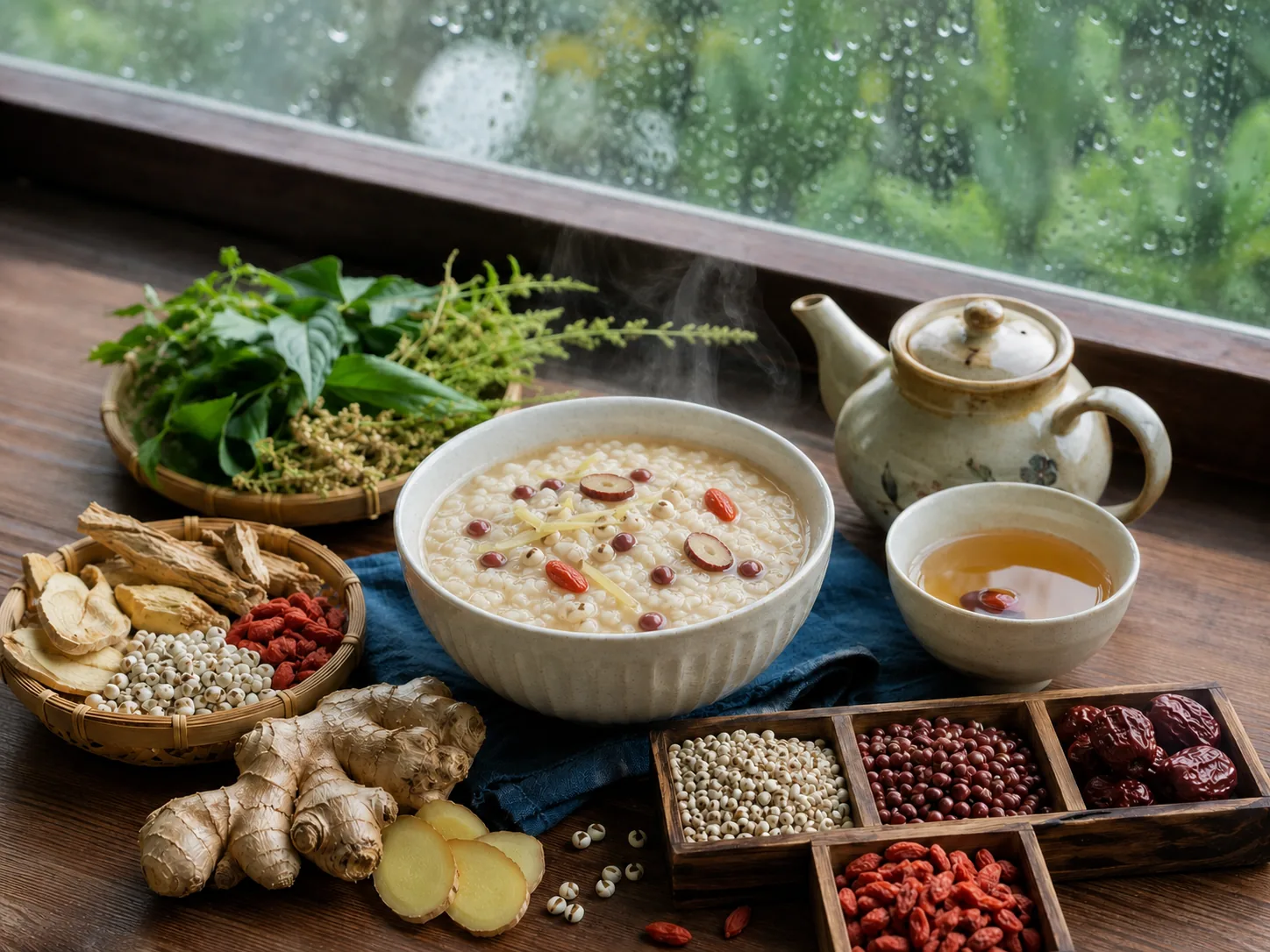
Goji berries, jujubes, job's tears, adzuki beans, sweetcorn, ginger and shiso are all easy places to start. A small handful in rice, porridge or soup is enough to bring a new seasonal note to a familiar dish.
There is no need to expect a dramatic result from one ingredient. Choose what you enjoy and what is easy to find, and let the whole meal remain the focus.
Recipe 1: goji, jujube and jasmine tea
For an easy first cup, steep goji berries and dried jujubes in hot water, then add jasmine tea. The berries add a little colour and the jujube brings a gentle sweetness without needing much sugar.
A warm tea is not a rule for every day; it is simply one welcoming option when cold drinks and air conditioning have become the default.
Recipe 2: job's tears and adzuki morning porridge
Cook rice, job's tears and adzuki beans until soft, then season lightly. A small amount of dried scallop can add depth if you enjoy it, but the basic version is enough for a quiet breakfast.
Soft porridge can be an approachable choice on a morning when humidity has taken away some of your appetite.
Recipe 3: chicken, jujube and goji soup
For a more substantial meal, simmer chicken wings with jujubes, goji berries, dried shiitake, ginger and spring onion. Keep the seasoning light and let the ingredients do most of the work.
It is a warm, uncomplicated soup for a rainy evening, especially when you want food that feels comforting rather than heavy.
Recipe 4: winter melon and sweetcorn soup
Winter melon and sweetcorn make a lightly sweet soup that suits muggy days. Use a simple stock and keep the texture soft; the aim is a soup that is easy to make and easy to eat.
Start by adding just one thing
Yakuzen does not require you to learn every theory before you begin. Add one seasonal element to a familiar meal and see what fits your routine.
- Breakfast: job's tears and adzuki porridge.
- Lunch: light noodles or a dressed dish with shiso or myoga.
- Dinner: chicken and jujube soup with ginger.
- A sweet pause: goji and jujube tea.
A little care for food, heat and home
As temperature and humidity rise, food spoils more easily. Cool prepared food promptly, refrigerate it and avoid leaving it out for extended periods. Handwashing before and after cooking remains an everyday essential.
A brief spell of ventilation, dehumidifying the room and not letting damp laundry linger indoors can make the home more comfortable. Humid weather can also be hot, so drink regularly and take a break in a cool place if the heat builds.
Frequently asked questions
Q. Can I have goji berries and jujubes every day?
Small amounts in food or tea can be an easy part of a normal meal. However, individual needs, medicines and health conditions vary, so seek professional advice if you are unsure.
Q. Should I avoid cold drinks during the rainy season?
There is no need to avoid them completely. If you feel heavy, have little appetite or tend to feel chilled, a warm tea or soup can be a comfortable alternative.
Q. Can children eat yakuzen-inspired food?
Everyday dishes made with familiar foods such as rice, beans, sweetcorn, chicken and small amounts of ginger are generally easy to adapt. For dried jujubes and goji berries, make sure the texture is suitable for the child by chopping or simmering them well.
References
- Japan Meteorological Agency — About the rainy season
- Kracie Kampo Full Life — Self-care for the rainy season
- Yomeishu Seizo — Simple yakuzen recipes for rainy-season discomfort
- Kracie Kampo Full Life — Jujube in the yakuzen ingredient guide
- Recipe inspiration cited in the Japanese original: Tefal Official — Goji berry and jujube jasmine tea
- Recipe inspiration cited in the Japanese original: BUYDEEM — Job's tears and adzuki morning porridge
- Recipe inspiration cited in the Japanese original: Gyomu Super Miracle Recipe — Chicken wings and jujube yakuzen soup
- Recipe inspiration cited in the Japanese original: Zen no Kitchen — Winter melon and sweetcorn soup
Yakuzen is a traditional way of reflecting on food and season; it is not a substitute for medical care. If symptoms continue, if you are pregnant, take medicines, have food allergies or are unsure about food or fluid choices, speak with a qualified professional.